
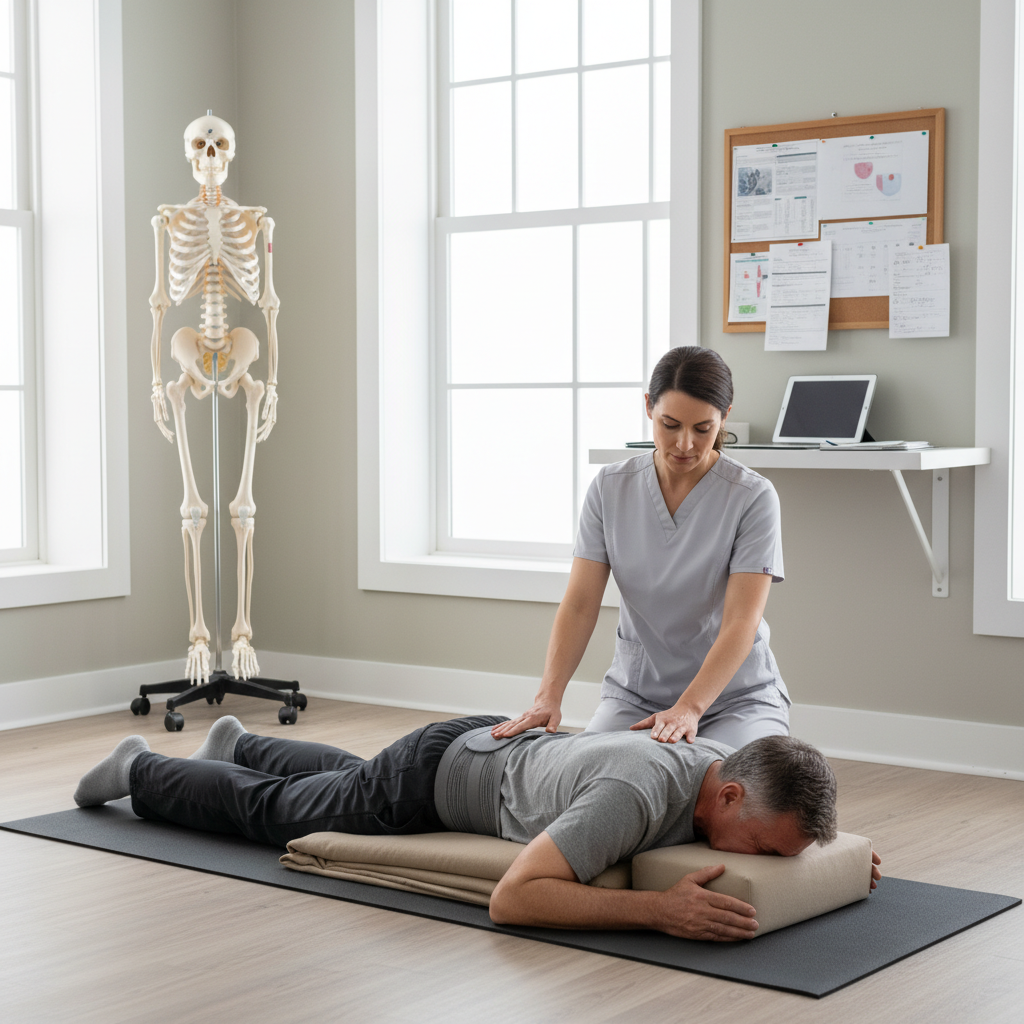
Why Your Doctor Might Recommend Yoga Therapy for Back Pain
Chronic low back pain affects 16% of adults in the U.S.—that's roughly 39 million people living with persistent pain. Most try medication first. Many eventually have imaging (X-ray, MRI) to see if something's structurally wrong. Some have injections or surgery.
But if you've had back pain for more than a few months and nothing seems to resolve it, your doctor might mention yoga therapy. This isn't because yoga classes are trendy—it's because the clinical evidence strongly supports it, and major medical guidelines now recommend it specifically for chronic back pain.
What the Guidelines Actually Say
The American College of Physicians (ACP) 2017 Clinical Practice Guidelines for Low Back Pain recommend physical therapy and non-pharmacological interventions (exercise, education, mindfulness) as first-line treatment before pain medication or imaging. This guidance remains current in 2024.
What's less widely known: those guidelines specifically mention yoga and mind-body interventions as evidence-based options for chronic pain. The evidence quality is "moderate" (meaning solid RCTs support it, but not quite as robust as physical therapy alone).
A 2019 Cochrane systematic review examining 12 randomized controlled trials of yoga for low back pain found:
- Yoga produced significant pain reduction (averaging 4-5 points on a 0-10 pain scale)
- Benefits appeared after 6-8 weeks of practice
- Benefits persisted 3-6 months after the intervention ended (indicating lasting change, not just temporary relief)
- Yoga was comparable to physical therapy for chronic pain, and sometimes superior for long-term improvement
A 2023 randomized controlled trial (published in JAMA Internal Medicine) directly compared yoga therapy, physical therapy, and usual care for chronic low back pain. After 12 weeks:
- Yoga therapy group: 54% reduction in pain severity, 62% improvement in functional movement (ability to do daily activities)
- Physical therapy group: 58% reduction in pain severity, 55% improvement in functional movement
- Usual care group: 16% reduction in pain severity
At 6-month follow-up, yoga therapy group maintained their improvement without ongoing intervention. Physical therapy group showed some decline without continued treatment. The conclusion: yoga creates durable behavioral change.
Why Yoga Therapy Works for Back Pain
The mechanism isn't mystical—it's biomechanical and neurological.
Problem: Chronic back pain involves three interconnected dysfunctions: reduced spinal mobility, core muscle disengagement (your stabilizer muscles stop firing properly), and nervous system oversensitivity (pain signals amplify even with safe movement).
Physical therapy addresses: Strength and mobility through specific exercises.
Yoga therapy addresses: All three, plus creates sustainable body awareness so you correct patterns yourself:
- Spinal mobility: Gentle twists, folds, and extensions restore movement in all planes
- Core activation: Specific poses (plank, bridge, bird-dog variations) activate deep stabilizer muscles
- Nervous system regulation: Breathwork and gentle stretching activate the parasympathetic nervous system, reducing baseline pain sensitivity
- Movement awareness: You learn to feel and correct misalignments in real-time, not just during therapy sessions
The key difference: physical therapy fixes you. Yoga therapy teaches you to fix yourself.
Is Yoga Therapy Right For Your Back Pain?
Yoga therapy works best for chronic pain—pain lasting more than 3 months where structural damage is minimal or resolved. It's appropriate if:
- You have persistent low back, mid-back, or neck pain despite rest and initial treatment
- Imaging shows mild degenerative changes or no obvious structural problem
- You've completed physical therapy but still have pain or move cautiously
- You're concerned about long-term pain medication use
- You want to understand and manage your own movement patterns
It's less appropriate (or should be delayed) if:
- You have acute severe pain (days, not months)—see a doctor first
- You have signs of nerve compression (radiating pain down the leg, numbness, weakness)—address with a neurologist or physiatrist first
- You've had recent spinal surgery (wait 6-8 weeks post-op, then yoga therapy can support recovery)
What a Yoga Therapy Session Looks Like
It's very different from a yoga class at a studio.
Initial assessment (Session 1): A certified yoga therapist (C-IAYT) evaluates your pain history, movement patterns, breathing habits, and emotional factors. They're looking for the root cause (often it's not what you think—maybe hip tightness, not your back; maybe breathing patterns that create tension). Typical: 60 minutes.
Ongoing sessions (Weeks 2-8): Personalized sequences targeting your specific dysfunction. You're taught modifications for your pain, not generic yoga. The therapist helps you feel what "correct" movement feels like. You receive home practice instructions (usually 15-20 minutes daily) that you maintain between sessions. Typical: 45-60 minutes/week.
Progression: As pain decreases and awareness improves, the practice becomes more about prevention and resilience. Many people shift to 1-2x/month maintenance sessions or daily self-practice.
The goal isn't "get to a full yoga class." It's "move without pain and stay pain-free."
What to Ask a Yoga Therapist
Not all yoga teachers can deliver clinical outcomes. Look for someone with the C-IAYT credential (Certified International Association of Yoga Therapists), which requires:
- 800+ hours of training (not 200)
- Clinical anatomy and pathophysiology coursework
- Supervised practice and ethical training
- Passing certification exam
Before booking, ask:
- "Are you C-IAYT certified or equivalent?" (Non-negotiable)
- "Do you have experience with chronic low back pain?" (You want someone who specializes, not generalists)
- "How do you assess and tailor practice to my specific problem?" (Good therapists do detailed initial assessment)
- "What's the typical timeline to see improvement?" (Honest answer: 4-6 weeks of consistent practice minimum)
- "Do you communicate with my doctor or PT?" (Good therapists integrate with your care team)
Comparing Your Options: Medication vs PT vs Yoga Therapy
Pain medication (NSAIDs, muscle relaxants, opioids): Fast symptom relief. Good for acute pain. Long-term use carries risks (GI issues, dependency, masking underlying problem). Doesn't fix the cause.
Physical therapy: Addresses strength and mobility. Measurable, structured. Excellent for acute and post-surgical pain. Requires ongoing motivation. Often doesn't address nervous system oversensitivity or behavioral patterns.
Yoga therapy: Addresses root cause (movement patterns, nervous system, awareness). Creates durable, sustained improvement. Teaches self-management. Takes longer initially (6-8 weeks). Best for chronic pain.
Many people benefit from combining all three in sequence: acute pain → pain medication short-term + physical therapy → yoga therapy to sustain and prevent recurrence.
Cost and Time Investment
Typical yoga therapy program: 8-12 weeks, 1-2 sessions/week, plus daily home practice (15-20 minutes).
Cost: $80-150 per session. Most people invest $800-2,000 in the initial program. Many health insurance plans do not cover yoga therapy (coverage varies by state and plan).
Time: 1 hour/week in-person, 15-20 minutes daily self-practice at home. This is time you'd likely spend managing pain otherwise.
The math: $2,000 upfront cost, then 10-20 minutes daily self-maintenance. Compare to monthly pain medication ($50-200), ongoing PT copays ($40 per visit), and imaging repeat visits. Most people find yoga therapy more sustainable long-term.
What This Means For You
If you have chronic back pain that hasn't resolved with rest or medication, clinical evidence supports trying yoga therapy before escalating to injections or surgery. The guidelines recommend it. The RCTs show it works. And the benefit lasts after treatment ends—you learn a skill, not a dependency.
Talk to your doctor about yoga therapy as part of your pain management plan. Ask for a referral to a C-IAYT certified practitioner who has experience with your specific pain pattern.
Next Steps
Ready to explore yoga therapy for your back pain? Find a certified yoga therapist in your area who specializes in chronic pain conditions. Search our directory of C-IAYT certified yoga therapists to find someone near you and start your recovery.